
Whale Watching in Coiba, Panama: Humpback Whale Season, July to October
When Is Whale Season in Coiba and Panama?
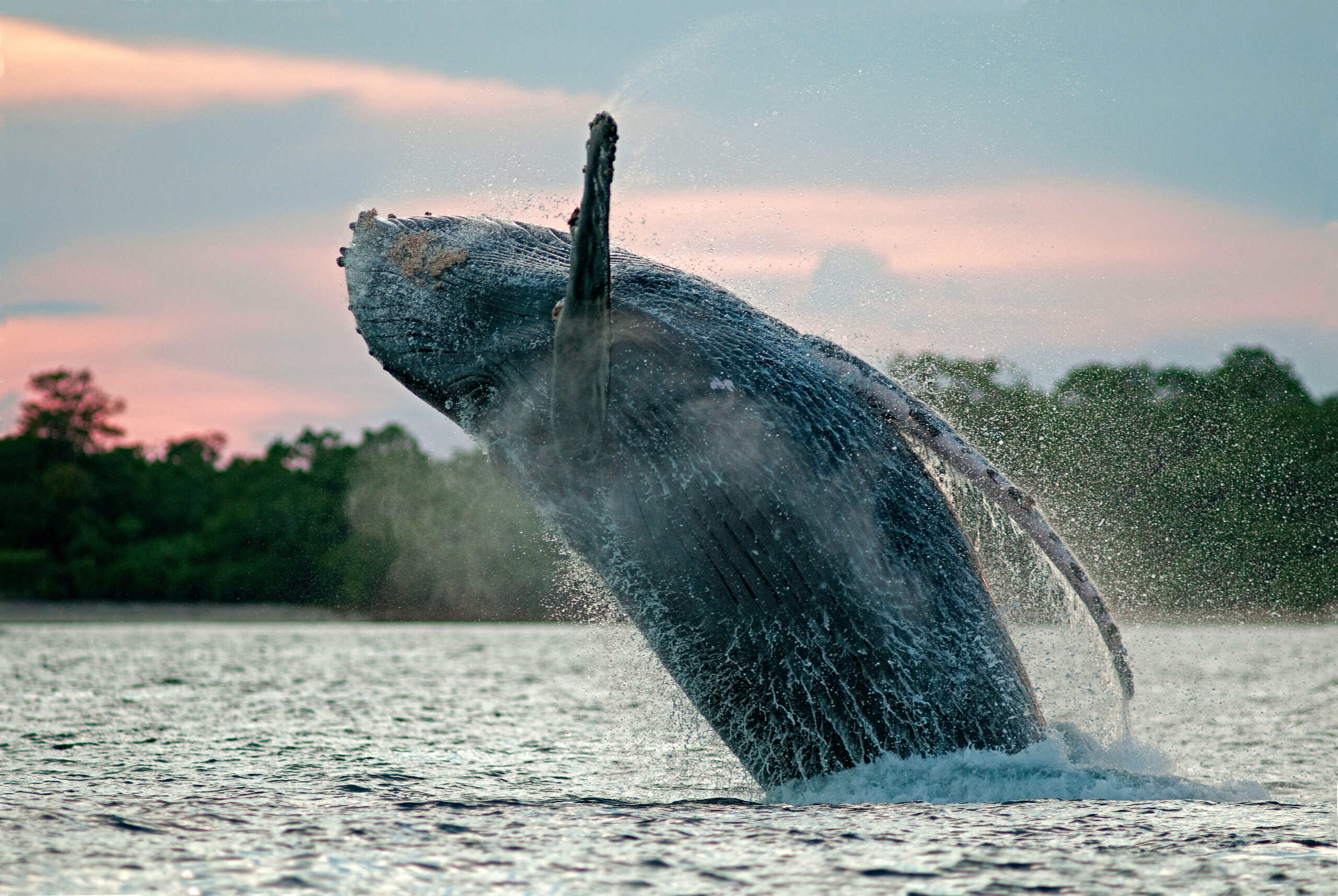
The humpbacks that visit Panama’s Pacific in our winter months come from the Southern Hemisphere. After feeding all summer near Antarctica, they travel more than 8,000 kilometers north, one of the longest migrations of any mammal, to the calm, warm water of the tropics. The first whales arrive in July, the season peaks in August and September, and the last mothers and calves head south in October.
That is when this stretch of the Pacific turns into a nursery. Males sing and compete, females give birth, and calves practice breathing and breaching next to their mothers before the long trip back.

A Nursery in the Pacific
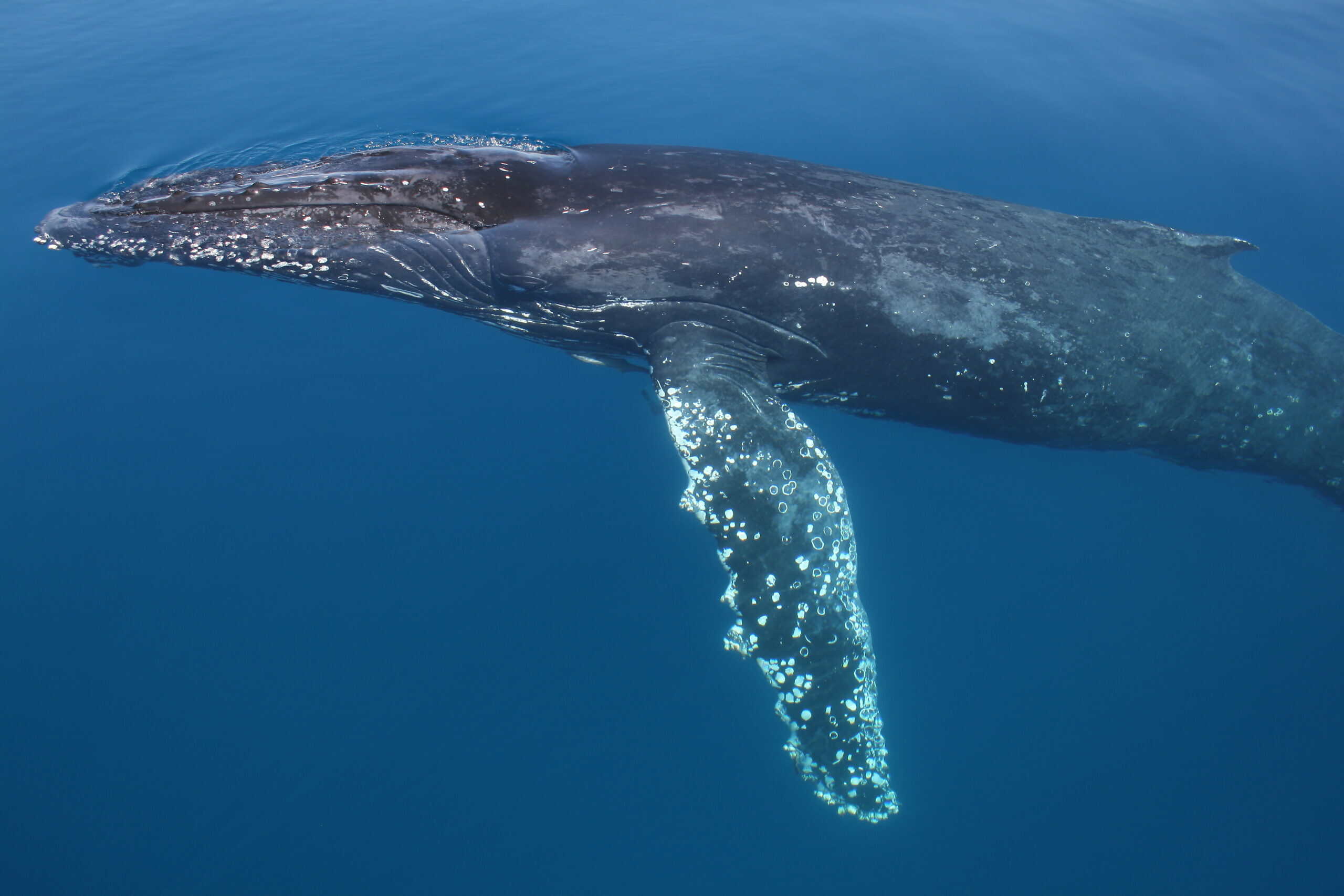
Mothers often rest near the surface with their calves. Seeing a newborn take its first breaths a few hundred meters away is a moment people talk about for years.
Blows, Tails and Breaches
Look for the blow first: a column of mist on the horizon. Then the arched back, the tail lifting before a dive and, if you are lucky, a full breach.
Why Watch Whales in Coiba
Coiba National Park is one of the richest places for whales and dolphins on Panama’s Pacific coast: 23 species of whales and dolphins have been recorded around it. Its open water, islands and sheltered bays sit right on the humpbacks’ route, so the ride to the park is often the best whale watching of the day.
And unlike a whale-only trip, the day doesn’t end with the whales. Coiba is the largest island in the Pacific of Central America, with 33 diving and snorkel sites, so the same day you can snorkel with sea turtles, land on an empty beach and walk a forest trail.

Dolphins All Year
Bottlenose and spotted dolphins often come to ride the bow. We slow down and let them decide how close to come.

Sea Turtles Below
Between whale sightings, jump in: Coiba is one of the main feeding grounds for hawksbill turtles in the Eastern Pacific.
Best Time of Day to See Whales
Morning. The sea is usually calmer early in the day, and on flat water a blow or a splash stands out from far away. That’s why we suggest leaving at 6:30 am from El Bongo or 7:30 am from Santa Catalina. The boat ride to Coiba, about 2 h 15 min from El Bongo or 1 h 15 min from Santa Catalina, crosses the open water where the humpbacks travel, so keep your eyes on the horizon from the moment we leave the dock.
How We Watch Whales: The Rules We Follow
Panama has clear national rules for whale watching, and we follow them on every trip. They exist so the whales keep coming back, and so the calves that are born here grow up without stress.
- At least 250 metersWe keep our distance from the whales and let them come closer if they want to.
- No chasing, no cutting their pathWe never follow a whale or put the boat in front of it. We approach slowly from the side and at low speed.
- 15 minutes with a mother and calfWhen a mother is with her calf, we watch for 15 minutes at most and then leave them in peace.
- Engines down, voices lowWe slow down near the whales and avoid sudden changes of speed or direction.
- No swimming with whalesWe watch them from the boat. The snorkeling comes later, on the reef.
Two Ways to See Whales Around Coiba
Private Coiba Island tour · $950 per boat
A full day for up to 6 people: whales and dolphins on the way, then island hopping, snorkeling and a ranger station trail inside the park.
Coiba 2-day tour · $1,700 per boat
Two days and twice the chances. With the night near the park, you are back on the water early, when the sea is calmest for spotting blows.
Read More About Whales in Panama
For the full story of the migration, how the Panama Canal changed shipping routes to protect the whales and every place to see them in the country, read whale watching in Panama by Pacific Adventure Tours. Planning the trip? Start with how to get to Coiba and what to bring.
Who Runs This Tour
Travel Coiba is a brand of Pacific Adventure Tours, Inc., a Panamanian tour operator licensed by the Panama Tourism Authority (ATP registry 0520-22051) and based at the Club Náutico de Veraguas in El Bongo. Pacific’s captains and guides have been exploring Coiba and the Veraguas coast for more than 15 years, and they run every Travel Coiba trip: same team, same boats, same park permits.
Travel Coiba is simply the easiest way to book Coiba with them. This exact trip also appears on Pacific’s own website.
Check Your Date
Tell us your date and group size and we confirm availability the same day.
Ask on WhatsAppUse the contact formFrequently Asked Questions
When is whale watching season in Panama?
From July to October on the Pacific coast, when around 2,000 humpback whales arrive from Antarctica to mate and give birth. The best months are August and September.
Where is the best place to see whales in Panama?
The Pacific coast of Veraguas, around Coiba National Park, is one of the best. 23 species of whales and dolphins have been recorded around Coiba, and the humpbacks travel right past it.
How much does whale watching in Coiba cost?
Whales are part of our private Coiba tours: $950 per boat for one day or $1,700 per boat for two days, for up to 6 people. The MiAmbiente park fee is paid separately.
What is the best time of day to see whales?
The morning, when the sea is usually calmer and blows are easier to spot. We suggest leaving at 6:30 am from El Bongo or 7:30 am from Santa Catalina.
How close can boats get to whales in Panama?
Panama’s rules ask boats to keep at least 250 meters from the whales, never chase them and spend no more than 15 minutes with a mother and calf. We follow them on every trip.
Can I also snorkel on a whale watching trip?
Yes. On our Coiba tours you watch whales on the way and then snorkel with sea turtles in the national park on the same day.
Travel Coiba is a brand of Pacific Adventure Tours, Inc., licensed tour operator (ATP 0520-22051), El Bongo, Veraguas, Panama.