What to See in Coiba National Park: Reefs, Wildlife, Beaches and Trails
38 islands, more than 100 islets and one day to choose. Here is what fills it.
Under the Water: 33 Diving and Snorkel Sites
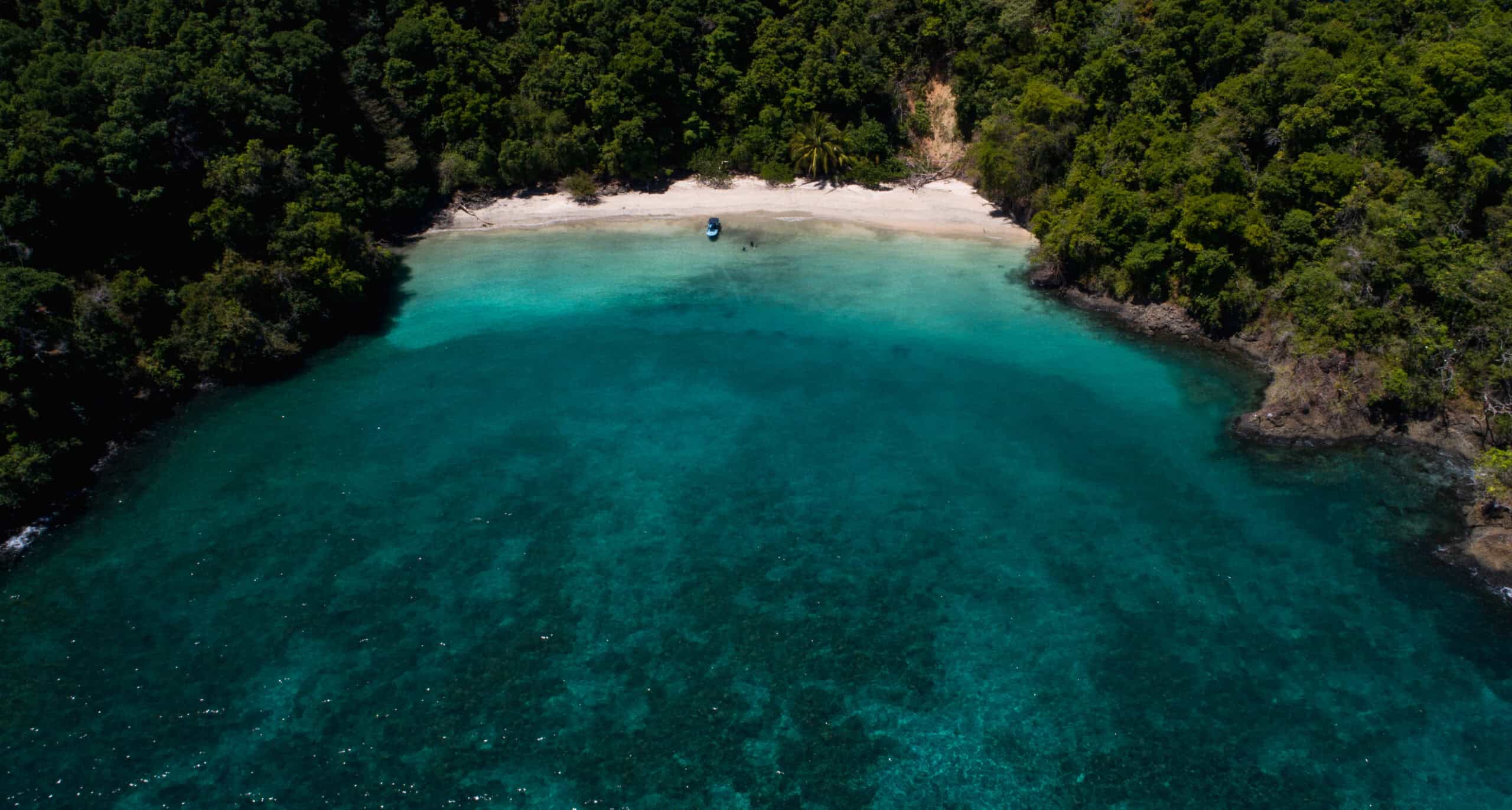
Coiba is the largest island in the Pacific of Central America, and the sea around it is the main show. The park has 33 official diving and snorkel sites, from shallow coral gardens where you can float for an hour to deep walls for certified divers.

Sea Turtles and Reef Fish
Hawksbill and green sea turtles feed on Coiba’s reefs, with clouds of reef fish around them. Most snorkel stops are calm and shallow, good for beginners and kids with a life jacket.

Big Schools
On the deeper sites, schools of jacks and barracudas move like walls. Divers go with a certified dive partner; we can plan it for you. Read the Coiba diving guide ↗
Wildlife You Can Meet
Humpback Whales and Dolphins
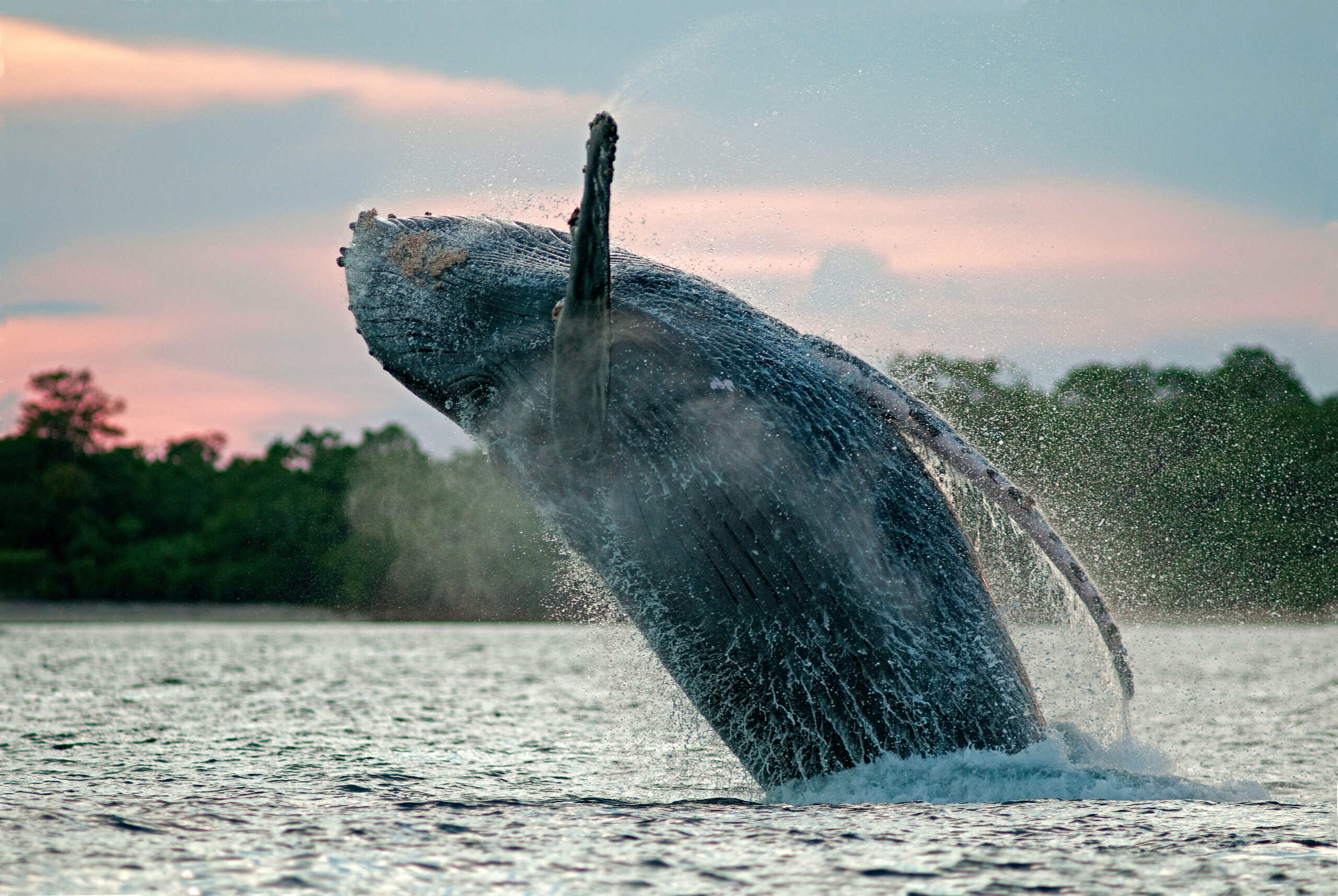
Humpbacks arrive from the south to breed and calve from July to October. Dolphins can show up any month, often on the boat ride out.
Capuchins, Howlers and Macaws
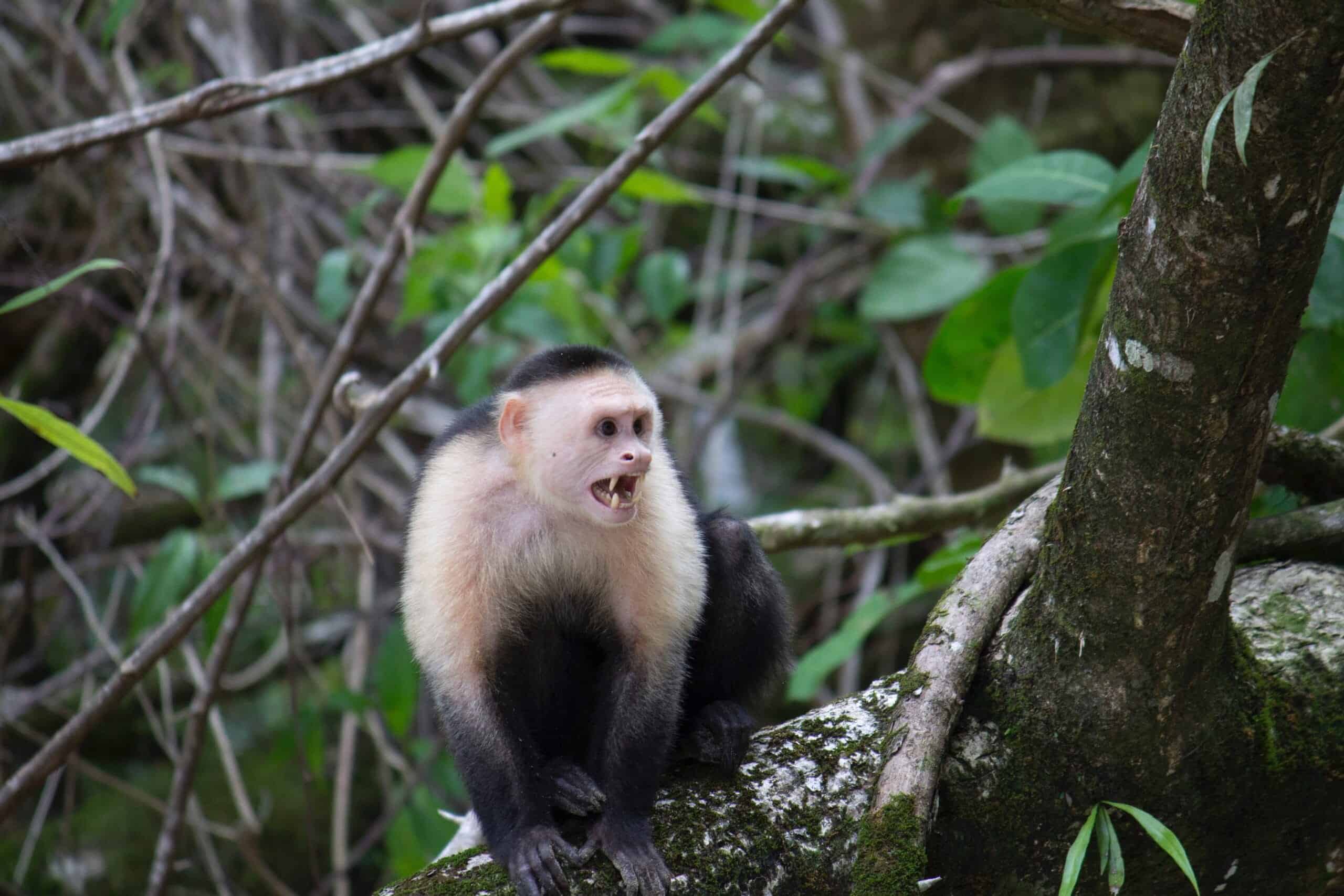
Years of isolation left Coiba with its own wild residents: white-faced capuchins, howler monkeys and flocks of scarlet macaws over the forest.
The Stone-Age Monkeys of Coiba
Coiba’s white-faced capuchins have done something no other population of their species is known to do: they use stones as tools every day. One stone is the hammer, a log or a rock is the anvil, and with them they crack open nuts, crabs, snails and shellfish on the beach. Researchers have been documenting it since 2017, and it is a skill unique to them.
Why here and not on the mainland? Scientists link it to life on the ground. Coiba has no jaguars or other big predators, so its capuchins spend much more time on the forest floor and along the shore than their cousins on the mainland, and that is where the stones, the crabs and the shells are. Watch them from a distance and never feed them.
Beaches and Island Hopping
Island hopping is how Coiba works best: a snorkel stop, a beach, another reef, lunch on the sand, all on one private boat. The day changes with the tide, so no two trips are the same. Some favorites, like Isla Rancheria, have their own story: read the Rancheria Island guide by Pacific Adventure Tours.

The Ranger Station and Its Trails
The ranger station is the park’s front desk: rangers check permits there, and two trails start nearby. Mirador Cocos and Cerro Gambute take about 45 minutes each way, through forest with a view at the end. Pack walking shoes (see what to bring). Around the station you may also meet the park’s famous crocodile story: the tale of Tito.
Coiba’s Past
Before it was a national park, Coiba was a pirate refuge and later a penal colony. That history is a big part of why the island stayed so wild. We tell it in the pirates of Coiba.
Watch Coiba Before You Go
One Day or Two?
One day covers the classic island hopping route. Two days reach the far islands and give you a second morning on the water, with the night at Bahía Honda or Isla Simca.
Check your date on WhatsApp See the Coiba tours
Private boat for up to 6 people: $950 per boat for one day in Coiba, $1,700 per boat for two. Into fishing? See the Coiba fishing charter, from $1,500 per boat. Coming from July to October? Read about whale watching in Coiba.
Frequently Asked Questions
What is there to see in Coiba National Park?
Coral reefs at 33 diving and snorkel sites, sea turtles and reef fish, dolphins, humpback whales from July to October, capuchin and howler monkeys, scarlet macaws, empty beaches and two trails at the ranger station.
Is Coiba good for snorkeling?
Yes. Many of its 33 diving and snorkel sites are calm and shallow, with sea turtles and schools of reef fish. Snorkel gear is on our boat.
When can you see whales in Coiba?
Humpback whales visit from July to October. Dolphins can be seen all year.
Can you hike in Coiba?
Yes. Two trails start near the ranger station, Mirador Cocos and Cerro Gambute, about 45 minutes each way.
How many islands does Coiba National Park have?
The park has 38 islands and more than 100 islets. Coiba, the main one, is the largest island in the Pacific of Central America.